A Food Technology Onboarding Template Set: Your Toolkit for Clarity and Engagement
Imagine you’re launching a new food safety app, introducing a novel processing method to your team, or creating educational content about sustainable packaging. Your audience needs to understand the concepts quickly, and they need to trust the information. This is where a specialized Food Technology Onboarding Template Set becomes more than just a design asset—it becomes a communication engine.
What Is This Template Set, Really?
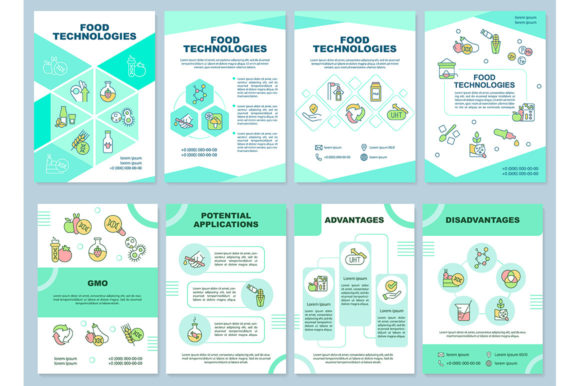
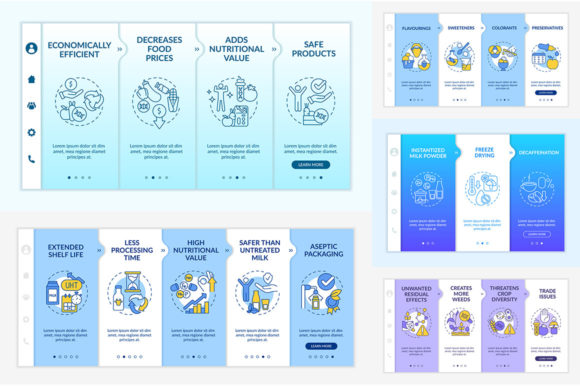
In practical terms, it’s a curated collection of professional design elements built specifically for explaining food tech concepts. You get a library of linear concept icons that visually represent processes like pasteurization, fermentation, or blockchain traceability. These icons are designed for a responsive mobile website or app, ensuring they look sharp on any device. The set includes ready-to-use web page walkthrough step screens that guide a user through a sequence, perfect for tutorials or onboarding flows. Typography is handled with clean, versatile fonts like Lato Bold and Regular. And you receive the actual product files in formats like EPS, SVG, PNG, JPEG, and AI, giving you the flexibility to edit, scale, and implement them in any project, from a digital brochure to a live application interface.
The Real-World Situations Where It Shines
This isn’t about abstract design. It’s about solving specific communication problems that creators and professionals face daily.
For Startups and App Developers
If you’re building a mobile app for food delivery logistics or a platform connecting farmers with processors, your first challenge is user onboarding. People need to grasp how your technology works before they trust it. Using the pre-built step screens and linear icons from this set, you can visually map out the journey—from order placement to cold-chain tracking—in minutes, not days. This accelerates your prototype development and creates a professional, cohesive feel that instills confidence in early users and investors.
For Corporate Trainers and Quality Managers
Introducing a new HACCP plan or a updated sanitation protocol to a diverse team of employees can be daunting. A PDF manual alone often fails to engage. Here, the template set acts as a foundation for creating an engaging brochure infographic template or a series of quick-reference mobile app screens. You can illustrate critical control points with clear icons and use the step screens to explain the sequence of actions for a corrective procedure. This visual approach improves comprehension and retention, making training more effective and less stressful for everyone involved.
For Educators and Content Creators
Bloggers, YouTube educators, or freelance writers covering topics like smart packaging or lab-grown meat need to make complex topics accessible. The icon set provides immediate, royalty-free visuals that can elevate a blog post, a video thumbnail, or a social media carousel. Instead of spending hours searching for or creating inconsistent graphics, you can pull a perfect SVG icon of a bioreactor or a QR code traceability system and integrate it directly into your content. This saves precious time and raises the perceived authority of your educational material.
For Marketing Agencies and Freelancers
When a client in the food tech sector—say, a company selling advanced dehydration equipment—needs a marketing campaign, you need to explain their product’s benefits quickly. The template set gives you a ready-made visual vocabulary. You can design a client presentation using the AI files, develop a responsive landing page with the walkthrough screens to explain the technology, and create a printed brochure using the PNG and JPEG assets. This consistency across multiple touchpoints strengthens the brand message and delivers a polished result faster, improving client satisfaction and your project profitability.
Considering Your Needs Before You Begin
While the utility is broad, a thoughtful approach ensures you get the maximum value. First, assess your primary output. Are you mainly creating digital content (websites, apps, online courses) or print materials (brochures, handouts)? The availability of both vector (EPS, SVG, AI) and raster (PNG, JPEG) formats covers both, but knowing your focus helps you organize the files. Second, consider your own design skill level. The AI and EPS files are fully editable in professional software like Adobe Illustrator, offering total control. If you primarily work with simpler tools like Canva or PowerPoint, the high-resolution PNG and JPEG files will be your go-to.
Also, think about the scope of your project. A single ebook might only need a handful of icons, while a full corporate training portal might utilize the entire set of icons and step screens. The beauty of such a collection is its scalability—you can use a little or a lot. Finally, connect the features to your desired outcome. If your goal is to reduce user confusion, the linear, sequential step screens are your key asset. If your goal is to establish visual brand consistency across all communications, the unified icon style and font guidance are what you’ll leverage.
Beyond the Download: An Ongoing Resource
The description mentions new topics and discounts every week, and subscribing to BSD Studio to stay updated. This points to a valuable, often overlooked benefit: such a template set is often part of a living creative ecosystem. For a hobbyist building a personal project about food preservation techniques, or a small business owner slowly developing their brand, this means access to future relevant icons and templates—perhaps on topics like 3D food printing or IoT sensors in agriculture. Staying subscribed can provide continuous inspiration and tools, turning a one-time purchase into a long-term creative partnership.
The Food Technology Onboarding Template Set is, therefore, a practical investment in clarity and efficiency. It understands that in our visually-driven world, explaining a technical process—whether to a consumer, an employee, a student, or a client—requires more than words. It requires a visual framework that is professional, adaptable, and immediately understandable. By providing the building blocks of that framework, it empowers creators, educators, and businesses to communicate with authority and ease, turning complex food technology concepts into engaging, user-friendly experiences.